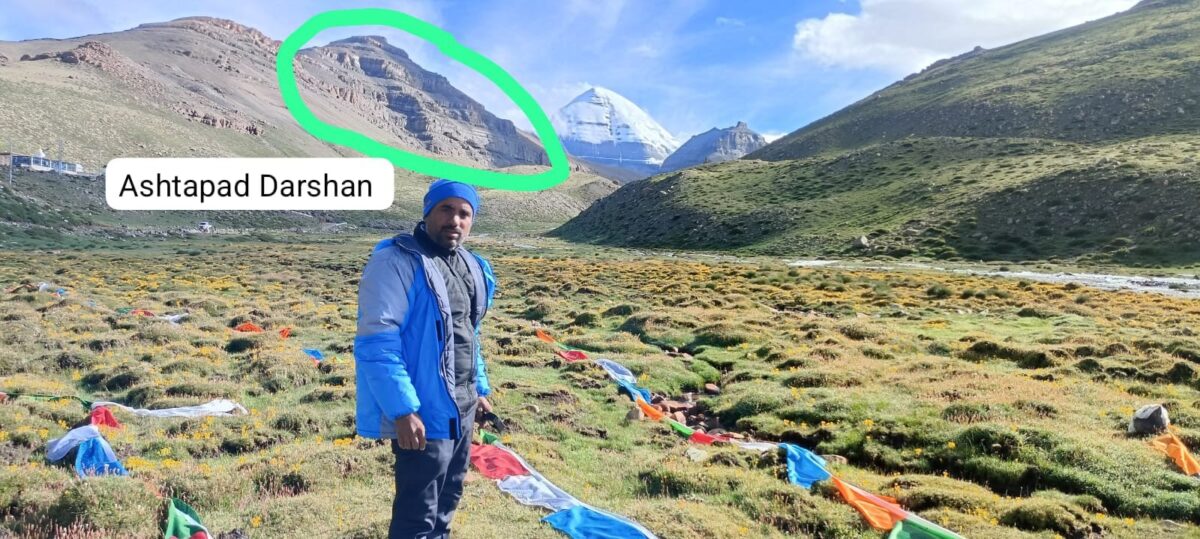
Ashtapad Darshan at Mount Kailash: A Journey of Faith
Ashtapad Tirth holds a place of profound reverence in Jainism. According to Jain scriptures, this is the divine site where Lord Rishabhadeva (Adinath), the first Tirthankara, attained moksha (salvation) after completing his spiritual journey. The very name Ashtapad translates to “Eight Steps”, symbolizing the eight essential stages of spiritual progress self-discipline, renunciation, meditation, wisdom, purity, compassion, truth, and liberation that lead a soul towards ultimate enlightenment.
For Jains, Ashtapad is not merely a mountain it is a spiritual gateway to nirvana, a place that embodies both the history of their faith and the eternal promise of liberation. Ancient texts also describe that King Bharata, the son of Rishabhadeva, commemorated this sacred event by building a palace of crystal and gemstones atop the mountain, making it shine like a beacon of purity and divinity. Though time and nature have transformed the site, Ashtapad remains etched in the hearts of devotees as one of the holiest, rare, and longed-for pilgrimages in Jainism.
Location of Ashtapad
Ashtapad is situated at an altitude of 4,900 meters (16,000 feet) in Tibet, very close to the sacred Mount Kailash. Reaching Ashtapad traditionally required undertaking the inner Parikrama (inner kora) of Mount Kailash an advanced and highly difficult trek compared to the outer kora that most pilgrims attempt. This challenging location makes Ashtapad both rare and spiritually powerful, as it lies in the very heart of the Himalayas where silence, divinity, and nature converge.
Spiritual Significance
- Lord Rishabhadeva’s Moksha: It is here that Adinath, the first Tirthankara, attained salvation, making Ashtapad an eternal seat of liberation.
- King Bharata’s Memorial: Jain texts describe that Lord Rishabhadeva’s son, King Bharata Chakravarti, built a grand palace of crystal and gemstones on this mountain to honor his father’s nirvana. This palace was said to shine with brilliance, symbolizing purity, truth, and the glory of spiritual victory.
- Sacred Meditation Site: For centuries, monks, saints, and Jain devotees have meditated near Ashtapad, considering it a place where the vibrations of enlightenment can still be felt. Many believe that simply remembering or visualizing Ashtapad brings spiritual merit.
Is Ashtapad Darshan Allowed?
- Until 2013: Pilgrims could attempt Darshan of Ashtapad as part of the inner Kailash Parikrama.
- Currently: Due to a fatal accident and safety concerns, the Inner Cora route has been closed by Chinese authorities. Now only Darshan of Ashtapad is permitted.
- Alternative Viewpoints: While access to the actual site is restricted, pilgrims undertaking the Kailash Mansarovar Yatra can still experience the energy of Ashtapad from nearby points in the inner Kailash region and through rituals and prayers performed at Lake Mansarovar and Darchen.
Importance for Jains Today
Ashtapad remains one of the holiest pilgrimage sites in Jainism, remembered with devotion during prayers, rituals, and Yatra. For many Jain devotees, the Kailash Mansarovar Yatra itself becomes an indirect way of honoring Ashtapad, as both sites are spiritually connected.
Shiven Holidays ensures that our pilgrims visiting Kailash Mansarovar are given the spiritual context of Ashtapad, allowing them to connect deeply with its significance even if direct access is restricted. Every journey is arranged with devotion, care, and reverence, making your pilgrimage both meaningful and unforgettable.