Kailash Mansarovar Yatra Packages
Unlike other mountains, Mount Kailash has never been climbed, as it is considered too holy. Pilgrims instead walk around it in a 52 km parikrama (circumambulation), believed to wash away sins and bring spiritual growth. At Lake Mansarovar, devotees take a holy dip in its icy waters, said to purify both body and soul. The journey is challenging—with high altitudes, rough trails, and unpredictable weather—but these very challenges make it transformative and spiritually uplifting.
The Kailash Mansarovar Yatra is not just a physical journey—it is a spiritual awakening. It tests endurance, humbles the ego, and fills the heart with peace and divine connection. Standing before Mount Kailash and Lake Mansarovar, one feels as if standing in the presence of the divine.
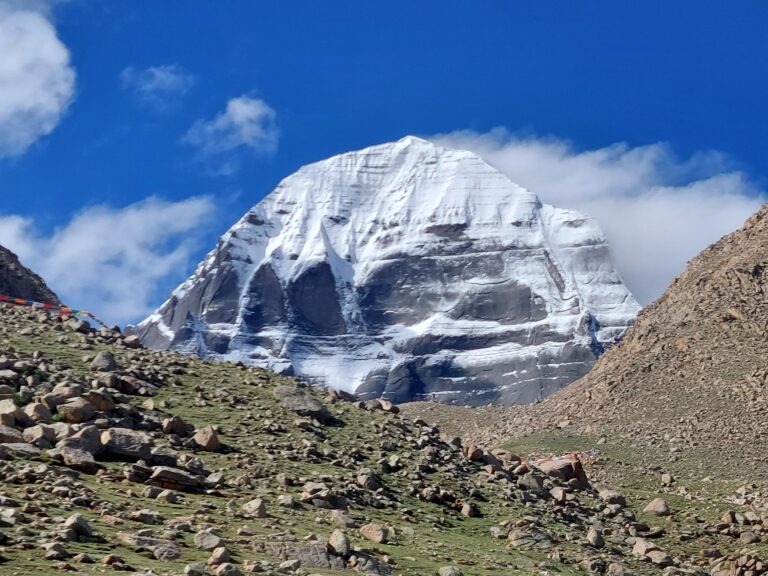
Mount Kailash
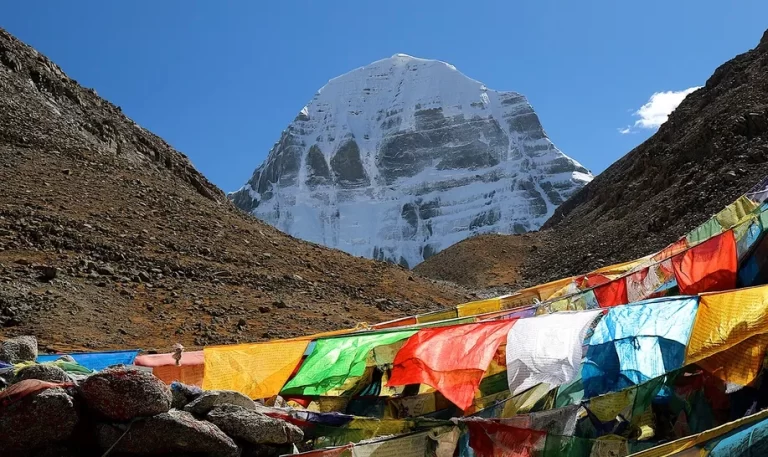
- Rising 6,638 meters (21,778 ft) high, Mount Kailash is revered by Hindus, Buddhists, Jains, and Bon followers as one of the most sacred peaks on Earth.
- The mountain has never been climbed, as it’s believed to be the divine abode of Lord Shiva and too holy to set foot on.
- Pilgrims perform the 52 km Kailash Parikrama, a 3-day circumambulation said to wash away the sins of a lifetime. The toughest stretch is the Dolma La Pass (5,630 m).
- Its pyramid-like peak glows gold at sunrise, silver at noon, and white under the moon—adding to its mystical aura.
- Spiritually, Kailash is regarded as the axis of the universe, from where major rivers like the Indus, Brahmaputra, Sutlej, and Karnali originate.
Lake Mansarovar
- Located at 4,590 meters (15,060 ft), Lake Mansarovar is one of the highest freshwater lakes in the world, covering about 412 sq km.
- Its crystal-clear waters are considered sacred—pilgrims take a holy dip or perform rituals, believing it purifies body, mind, and soul.
- Hindus believe it was created in the mind of Lord Brahma; Buddhists see it as a symbol of purity.
- At night, the still waters reflect stars, the moon, and surrounding peaks—creating a view that feels like standing at the edge of heaven.
- Many pilgrims also walk the 90 km parikrama (circumference) of the lake, seeking blessings and inner peace.
Places to Visit During the Yatra
- Rakshastal (Lake of Demons): A mysterious dark lake beside Mansarovar where Ravana is believed to have meditated. Its barren surroundings contrast sharply with Mansarovar’s serenity.
- Tirthapuri: Famous for its natural hot springs where pilgrims bathe after completing the Kailash parikrama. Legend says Goddess Parvati bathed here, blessing the waters.
- Asthapath: A serene valley offering majestic views of Mount Kailash—believed to be where the Pandavas ascended to heaven.
- Yam Dwar: The “Gateway to the God of Death” and the spiritual entry point to the parikrama, symbolizing the shedding of sins and negativity.
- Four Faces of Mount Kailash: The mountain’s four faces (North, South, East, West) are said to be made of different jewels, representing divine attributes.
- Dirapuk Monastery: Located near the north face of Mount Kailash, offering mesmerizing sunset views of the sacred peak.
- Zuthulpuk Monastery: Known for its meditation caves where sages practiced penance. It marks the completion of the parikrama and the beginning of inner transformation.
What Makes This Yatra Special?
- Faith Across Religions: Revered by Hindus, Buddhists, Jains, and Bon followers—Kailash unites multiple faiths through shared spirituality.
- Peace Through Challenge: The trek’s difficulty transforms hardship into meditation, teaching humility and patience.
- Legends Everywhere: From Lord Shiva’s meditation to Ravana’s penance, every rock and stream tells a divine story.
Best Time to Visit Kailash Mansarovar
The ideal time for the Kailash Mansarovar Yatra is from May to September, when weather conditions are relatively stable and skies are clear. Early summer (May–June) offers peaceful treks, while July–August brings greenery and occasional rains. September is perfect for crisp air and stunning mountain views. Nights can be freezing, so warm clothing is essential.
How to Reach Kailash Mansarovar
- From Lucknow (via Nepalgunj with Flight and Helicopter): The most popular route—travelers drive to Nepalgunj, then fly to Simikot and continue via helicopter and road to Kailash.
- By Road from Kathmandu via Kerung Border: A scenic overland journey through Tibetan landscapes to Kailash.
- By Flight and Road via Lhasa: Fly to Lhasa, then continue the journey by road through breathtaking Tibetan terrain.
Why Choose Shiven Holidays for Kailash Mansarovar Yatra
- Diverse Yatra Options and Accessibility: Shiven Holidays offers various formats—helicopter tours (9–11 days), overland routes from Kathmandu, and Aerial Darshan packages for quick 3-day spiritual experiences.
- Focus on Comfort and Logistics: Expert handling of Chinese visas, Tibet travel permits, and safe transport with professional guides, oxygen support, and medical backup.
- Spiritual and Customer-Centric Approach: Guidance for rituals such as Holy Bath and Puja at Lake Mansarovar, along with dedicated customer support.
- All-Inclusive Packages: Cover transportation, accommodation, meals, permits, and experienced staff—ensuring a seamless and devotional experience.
Final Thoughts
Kailash Mansarovar Yatra is not about how far you travel but how deeply you feel. Standing before Mount Kailash and Lake Mansarovar is an experience beyond words—a moment where faith, nature, and divinity merge. It is challenging, yes, but the peace, clarity, and strength it brings stay with you for a lifetime. If your heart is calling, this is a journey worth taking.